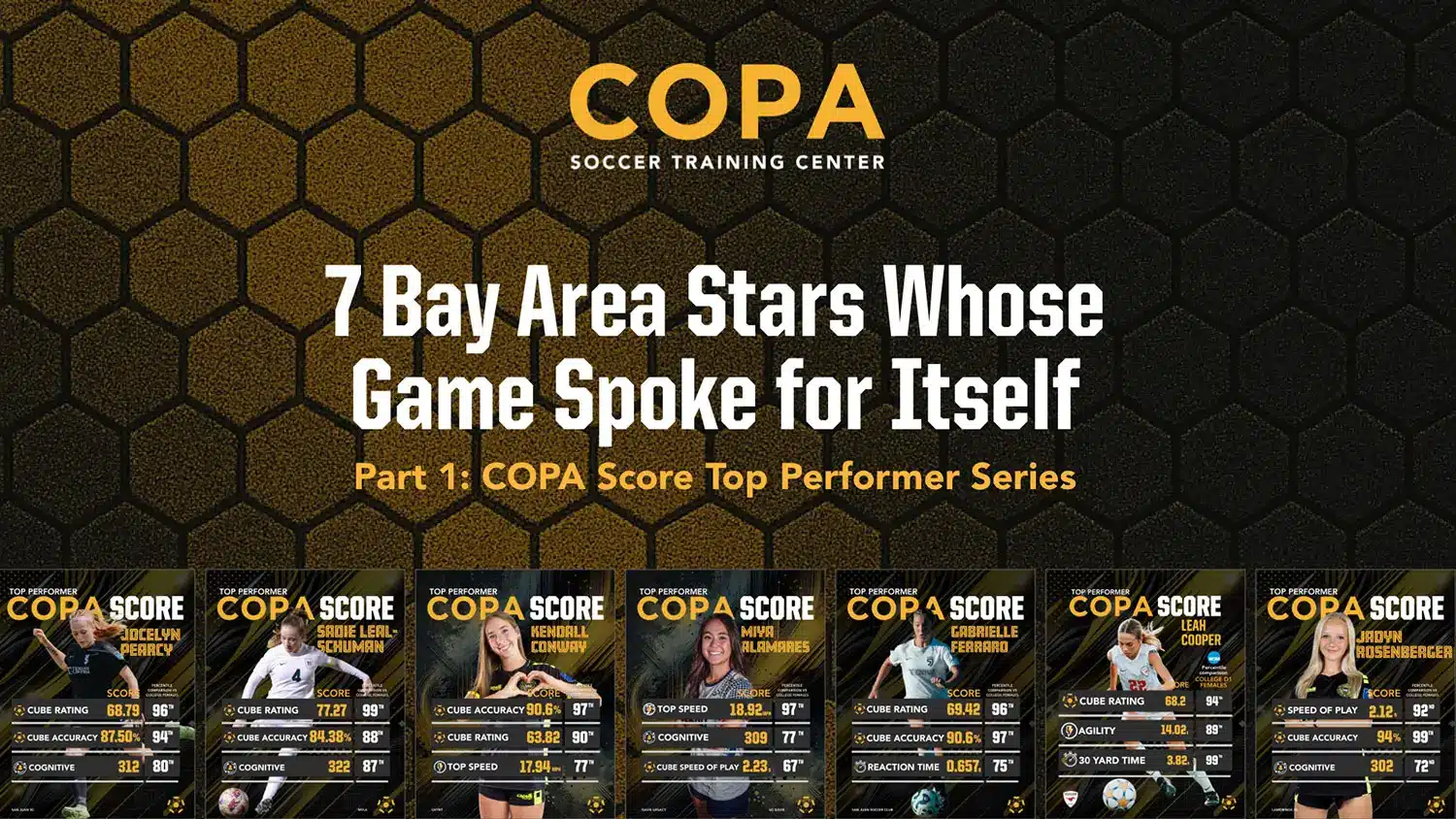
Seven Bay Area Stars Whose Game Spoke for Itself

Before their commitments were announced, their objective data was leaving clues

Part-1-COPA-Score-Performance-Series

The Bay Area continues to stand as one of the best regions for developing elite female soccer talent. This year alone, an exceptional group of players officially committed to Division I programs—an accomplishment built through years of training, growth, and consistently performing at the highest level.

As part of their development, many of these players completed the COPA Score — a standardized, evidence-based assessment measuring technical, physical, and cognitive performance through validated tests. Backed by years of research and a benchmark database of more than 600 active collegiate players, the COPA Score Dashboard (launched summer 2025) provides players and families with a clear, objective picture of their strengths, development trends, and how their performance compares to collegiate and pro standards.

These players took the COPA Score as one step in their ongoing development process. Following their assessments, each was recognized as a Top Performer in COPA’s database — meaning their objective outputs stood out among peers with similar aspirations and levels of play.

As the saying goes, “success leaves clues”. And now, looking back, it’s easy to see how those clues were reflected in their data. The COPA Score didn’t predict their future, but it captured early indicators of the qualities college coaches later valued: speed of play, technical efficiency, physical readiness, and cognitive sharpness.

This group—now committed to top programs across the nation—showed data-backed traits that aligned with the standards of top NCAA athletes long before their commitments became public. Their stories highlight how objective measurement can support talent identification, providing clarity in a pathway that is often subjective.

This first article in our Top Performer series spotlights seven standout female Bay Area players who have committed to Division I programs this year.

Definition & Data Interpretation: percentile ranking shows how a player’s performance compares to others of a specific dataset. For example, a player with Top Speed in the 90th percentile compared to female college players performed better than 90% of the female college female players who have taken the COPA Score.
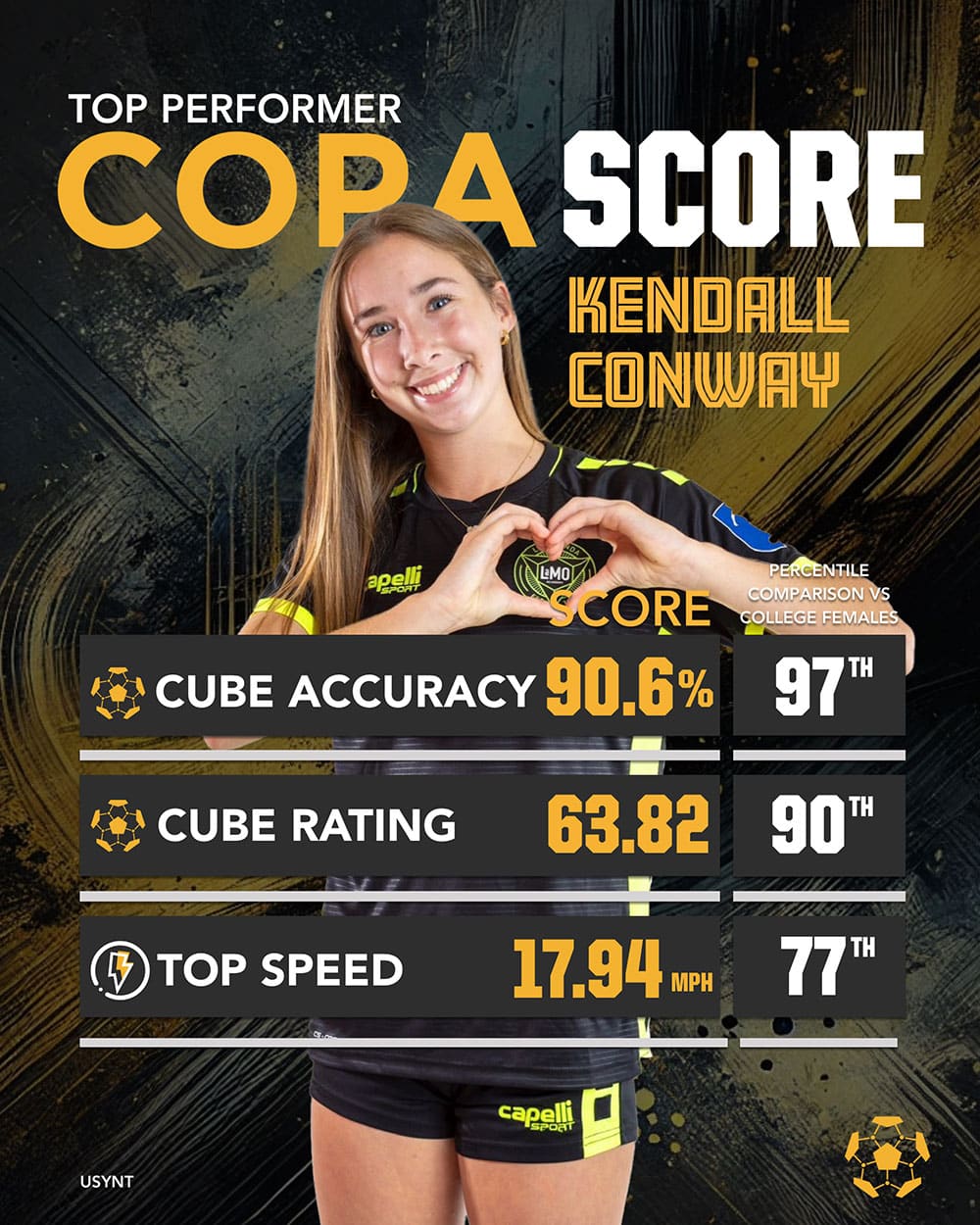
Kendall Conway – Lamorinda – Wake Forest

Reference Group: NCAA Female Soccer Players

A USYNT midfielder, Kendall’s speed, sharp technical ability, and dangerous final-third instincts stand out in every match. Her impressive blend of technical and speed metrics demonstrate why she’s so effective in transition and tight spaces. With Lamorinda SC’s track record behind her, Kendall’s ceiling continues to climb. Kendall has recently committed to Wake Forest where she’s poised to make a big impact!

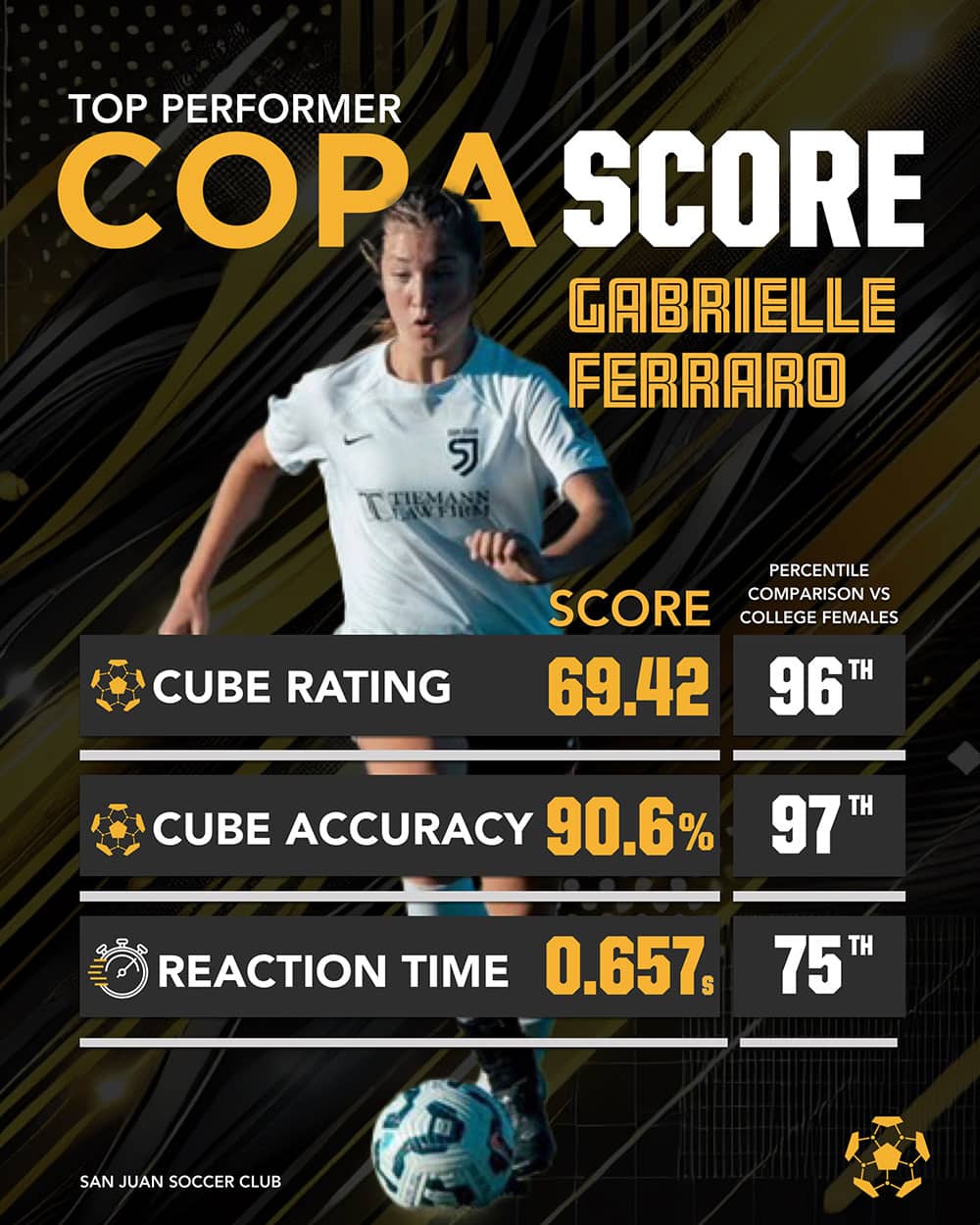
Gabrielle Ferraro – San Juan SC - Duke

Reference Group: NCAA Female Soccer Players

A composed and technically sharp midfielder for San Juan SC, committed to Duke and recently invited to US Soccer Youth National Team, Gabrielle Ferraro is one of the countries most talented players for her age. Her ability to stay calm under pressure and dictate play against older opponents is reflected in her top-percentile Cube Rating and Accuracy, which match the standards of high-level collegiate midfielders.

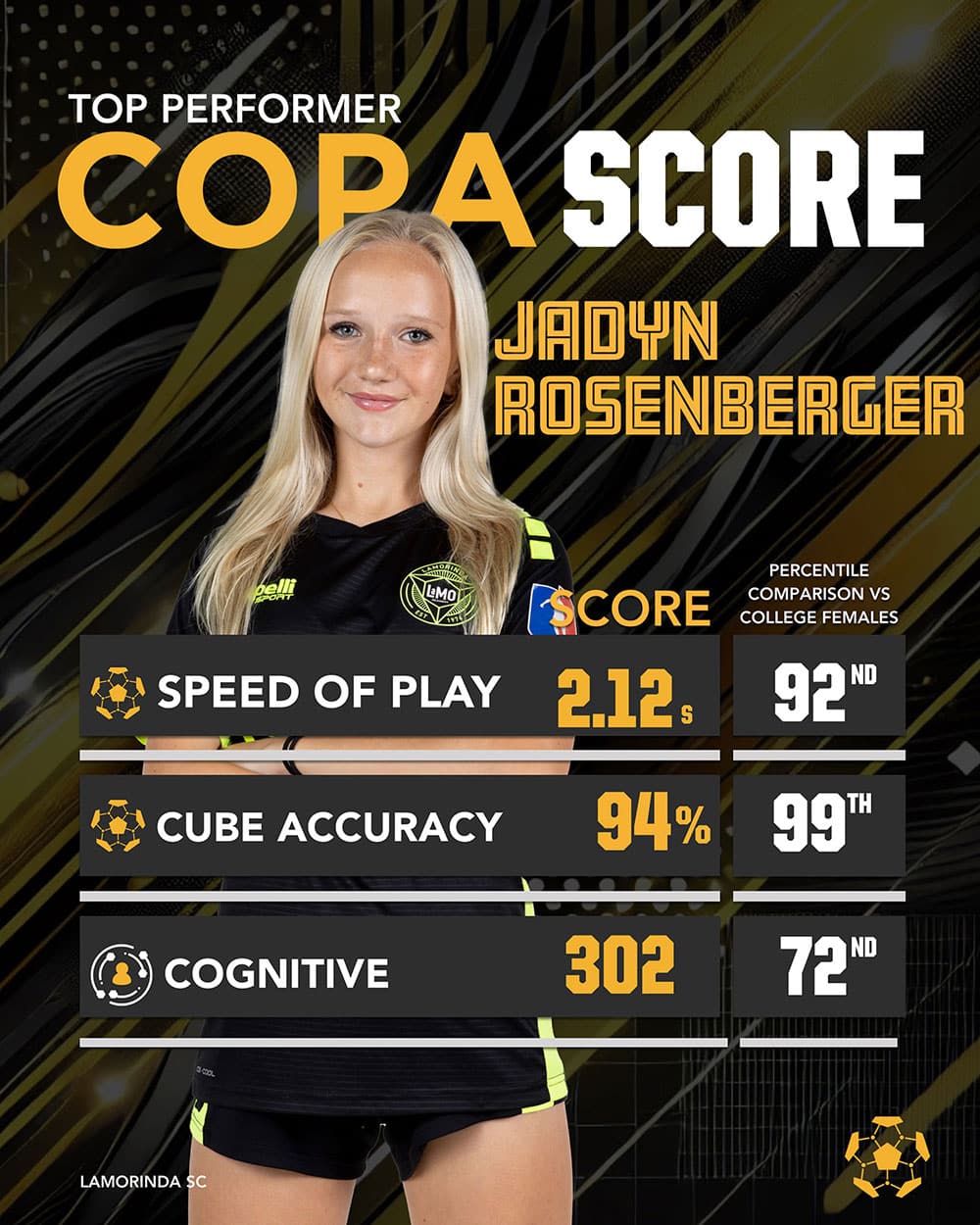
Jadyn Rosenberger – Lamorinda - Auburn

Reference Group: NCAA Female Soccer Players

A gifted Lamorinda SC midfielder, Jadyn plays with precision, aggression, and high-level decision-making. Already excelling beyond college players her 99th-percentile accuracy and rapid speed-of-play data reflect her technical sharpness. It’s no wonder multiple high profile schools were interested in her, while also standing out at COPA X Racing Louisville Talent ID Day. Only a Junior, Jadyn has already committed to Auburn.

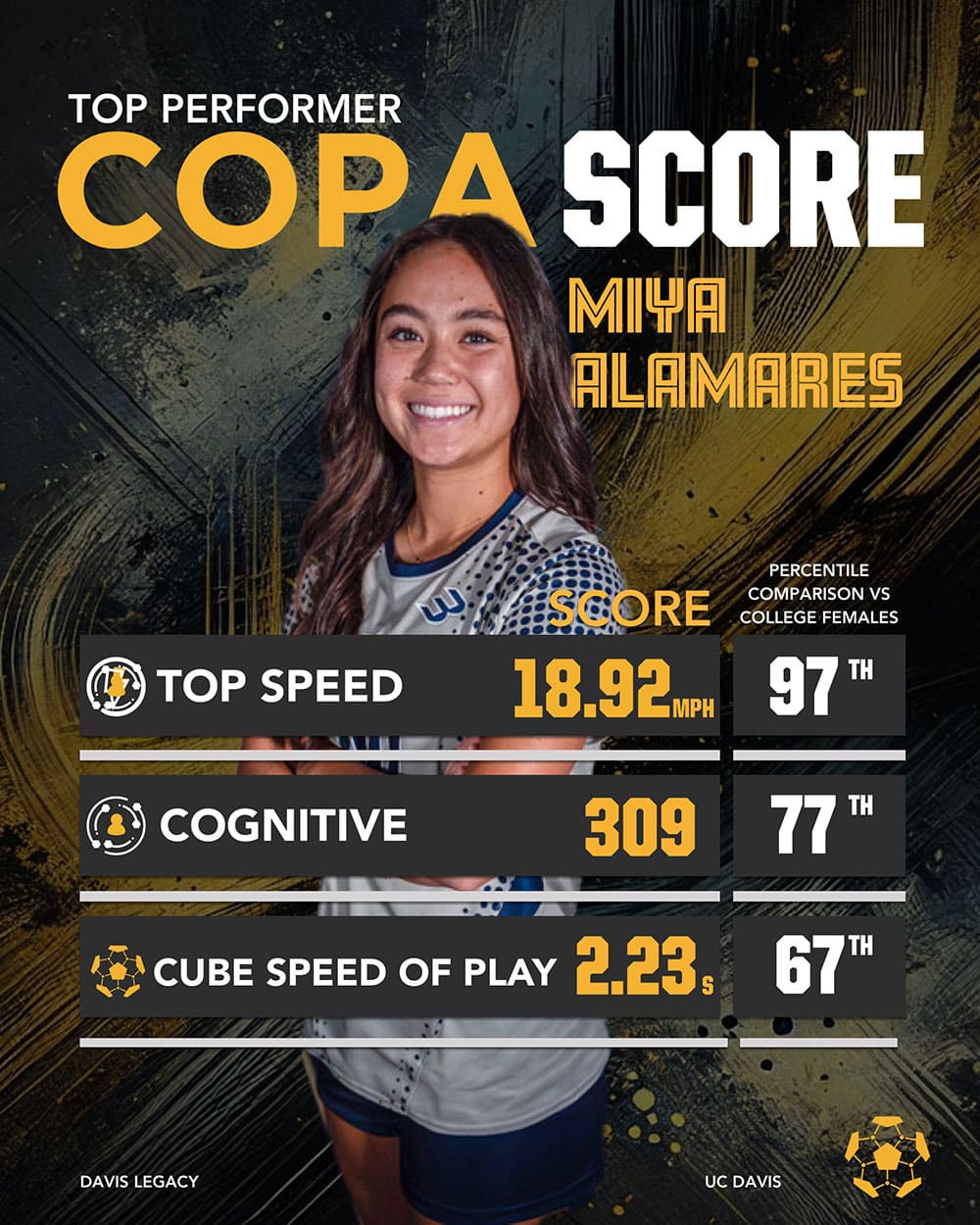
Miya Alamares – Davis Legacy - Oregon

Reference Group: NCAA Female Soccer Players

A dynamic Davis Legacy ECNL attacker, Miya’s game is defined by explosiveness and composure under pressure — reflected in her 97th-percentile top speed and strong cognitive processing metrics. Originally committed to UC Davis before re-committing to Oregon, she projects as an immediate-impact wide or central threat at the next level.

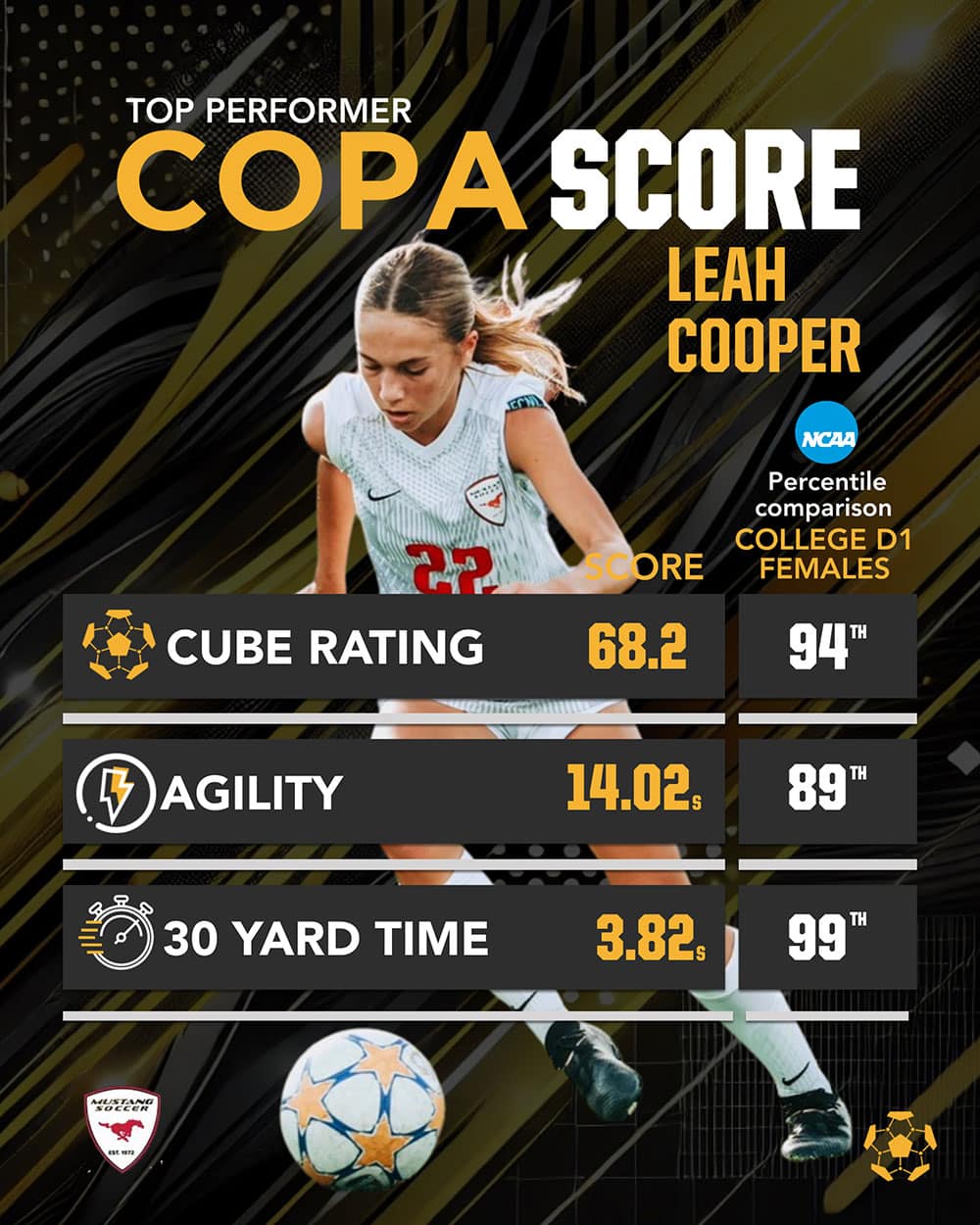
Leah Cooper – Mustang SC - Idaho

Reference Group: NCAA Division 1 Female Soccer Players

An explosive winger and striker for Mustang SC, Leah combines pace with fearless attacking intent. Her elite acceleration and high Cube Rating show why she consistently beats defenders 1v1 and creates chances. A standout player at Mustang SC, Leah recently committed to Idaho where her ongoing development and strong skill set her up for a successful college career.

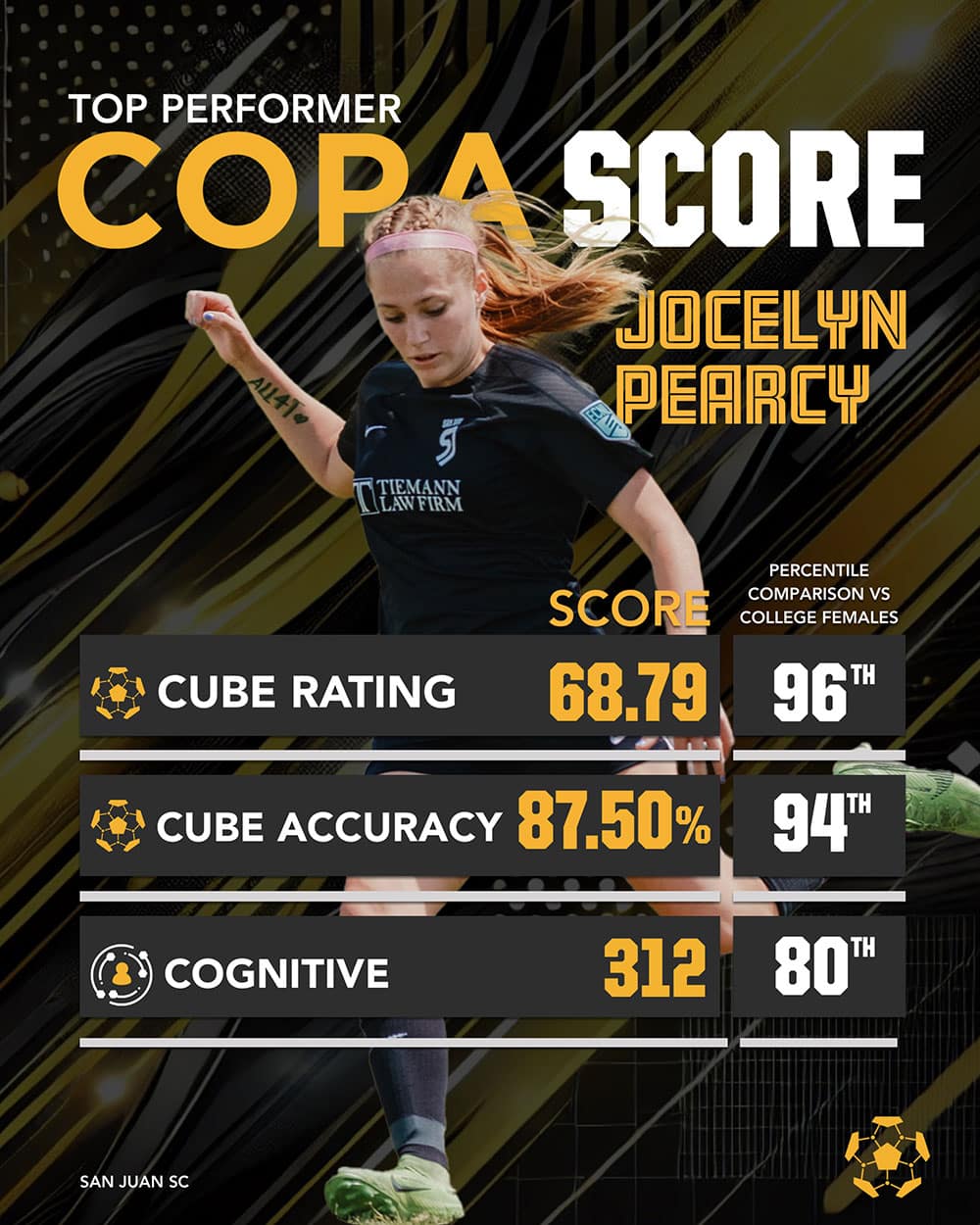
Jocelyn Pearcy – San Juan SC – Michigan State

Reference Group: NCAA Female Soccer Players

A creative playmaker for San Juan SC, Jocelyn blends precision, vision, and big-moment composure — traits reflected in her elite Cube Rating and accuracy percentiles, which match top college players. An ECNL All-American and NorCal All-Conference standout, she now heads to Michigan State, where her ability to process the game at speed and execute with technical sharpness makes her a natural fit for Big Ten competition.

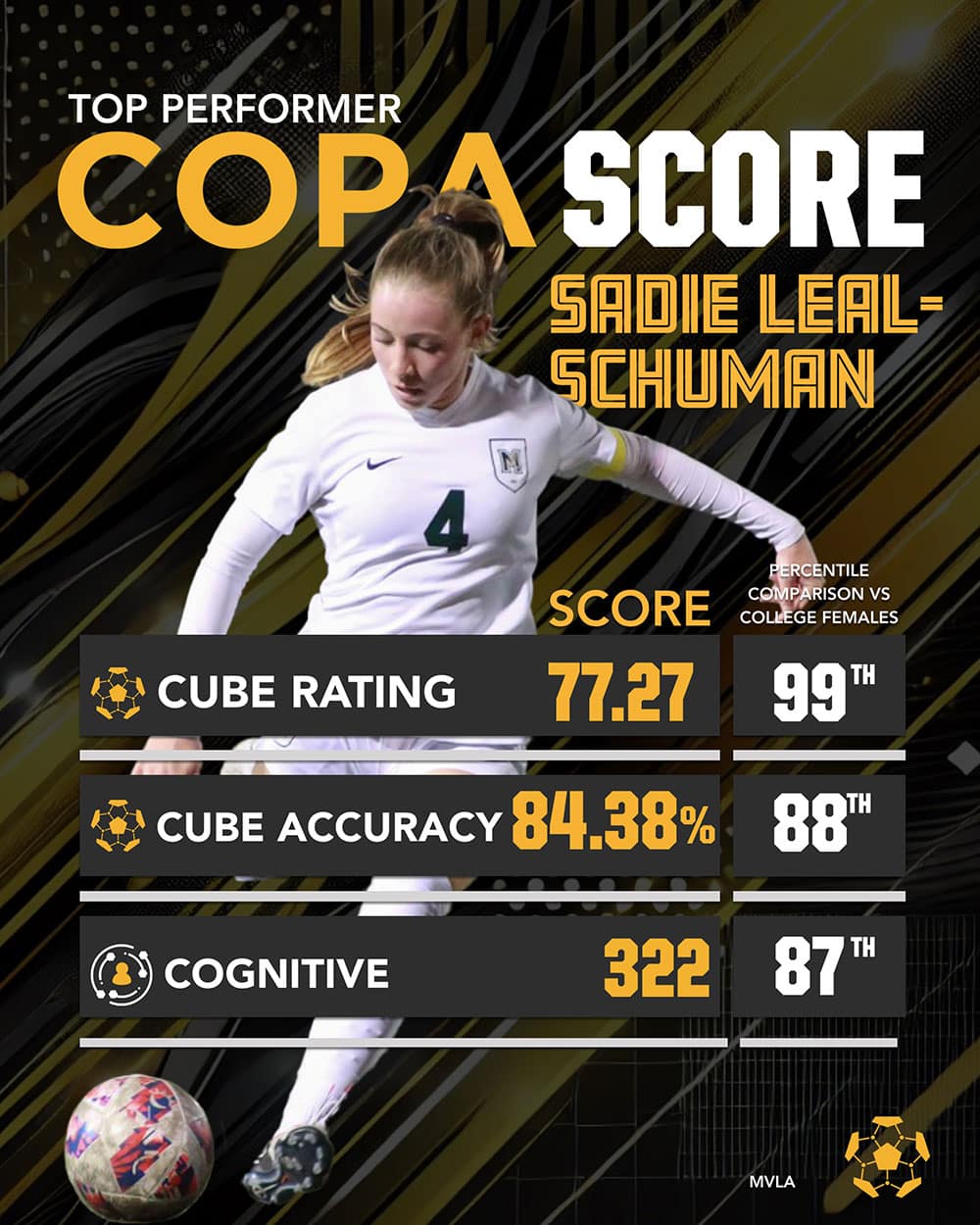
Sadie Leal-Schuman – MVLA - Stanford

Reference Group: NCAA Female Soccer Players

A dominant defender for MVLA ECNL, Sadie brings intelligence, timing, and poise under pressure — qualities mirrored in her top-percentile Cube Rating and Cognitive Score, which highlight her elite decision-making. After leading Miramonte to an NCS title in 2024 and earning a spot at Stanford, she steps into one of the strongest development environments in the world with the tools to thrive immediately.

A Region Built for Development

The Bay Area’s ecosystem continues to produce talent capable of reaching the country’s top collegiate programs—and these eight athletes are the latest examples.

As college programs rely more heavily on objective, science-based context to understand a player’s strengths, tools like the
COPA Score Dashboard have become valuable for players seeking clarity in their development.

Not as pathways or predictors — but as evidence-based insights that help athletes better understand their performance, track progress, and set purposeful goals.